





Can Aluminum Replace Titanium?
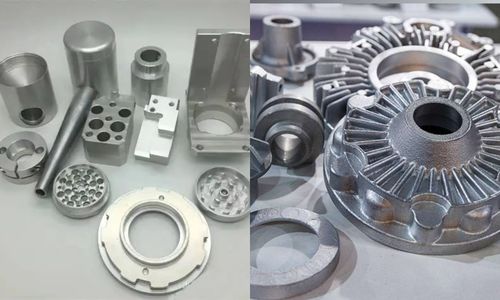
A leak problem in a newly built Boeing spacecraft in 2024 initiated a discussion regarding "aluminum alloy solenoid valves" and "titanium alloy solenoid valves" in a wide range of applications. At the heart of this issue is not only a technical aspect but also a fundamental question: in a space environment, can aluminum alloy possibly substitute titanium alloy in terms of performance? To answer this question, a detailed analysis of aluminum alloy and titanium alloy is required from four main aspects: material, process, composition, and application.
Aluminum vs. Titanium
Material Properties
In aerospace, materials matter because they directly affect how a vehicle performs.
Titanium alloys are known for their strength. They are also lightweight and highly resistant to corrosion. These qualities make them the top choice for high-performance spacecraft.
Aluminum alloys are strong, too, but they fall short in certain areas. Compared to titanium, they don’t handle high temperatures as well. They are also less resistant to corrosion.
So when it comes to performance, aluminum just can't replace titanium.
Manufacturing Processes
Titanium alloys are notoriously difficult to machine, which requires special machinery and processes. Aluminum alloys, on the other hand, are relatively easy to work with, and the cost of processing them is relatively low. This fundamental difference in the manufacturability of these two alloys defines their use in the aerospace industry. Titanium alloys, with their unique properties, are used in critical components such as aircraft engines and landing gear. Aluminum alloys are used in non-structural components such as aircraft skins and fairings.
Chemical Composition
Essentially, there is often a misunderstanding of material composition as part of the "substitution" argument. While it is true that many titanium alloys have aluminum as part of their composition (such as Ti-6Al-4V), this does not mean to imply that an aluminum alloy can simply be substituted. In Ti-6Al-4V, there is only a small percentage of aluminum as part of the composition, and it is dependent on the ratio of titanium, aluminum, and vanadium. Aluminum alloys and titanium alloys are fundamentally different materials.
Applications
In the aerospace business, there is always a trade-off between performance and cost, and materials are no exception. Titanium alloys are selected for critical applications for their high performance, despite their high cost. Aluminum alloys, for their moderate performance and low cost, are the workhorses for non-structural applications. This division of labor is not arbitrary; it has been validated over decades of experience.
Conclusion
Summing up, aluminum and titanium alloys are two distinct and well-defined materials in the aerospace field. Their performance, processing, composition, and logic of usage are not interchangeable. While the pursuit of cost control and manufacturing efficiency is important, we cannot overlook the profound impact that material selection has on overall system safety.
Advanced Refractory Metals offers titanium alloys, aluminum alloys, refractory metals, and precious metals. We can also customize our materials to suit any specifications/drawings provided.
REVIEWS
{{viewsNumber}}
Thought On "{{blogTitle}}"

{{item.name}}
{{item.created_at}}
{{item.content}}
LEVE A REPLY
Comment
Name
*
Email
*
{{item.children[0].name}}
{{item.children[0].created_at}}
{{item.children[0].content}}
{{item.name}}
{{item.created_at}}
{{item.content}}
More Replies
LEAVE A REPLY
Comment
*
Name
*
Email
*
SUBSCRIBE OUR NEWSLETTER
Your Name
*
Your Email
*
Success ! You're now subscribed
You've been successfully subscribed! Check your inbox soon for great emails from this sender.
Our Latest News
Tel : (949) 407-8904
Address : 1940 East Deere Avenue, Suite 100, Santa Ana, CA 92705, U. S. A
Metals

Useful Links
Featured Posts